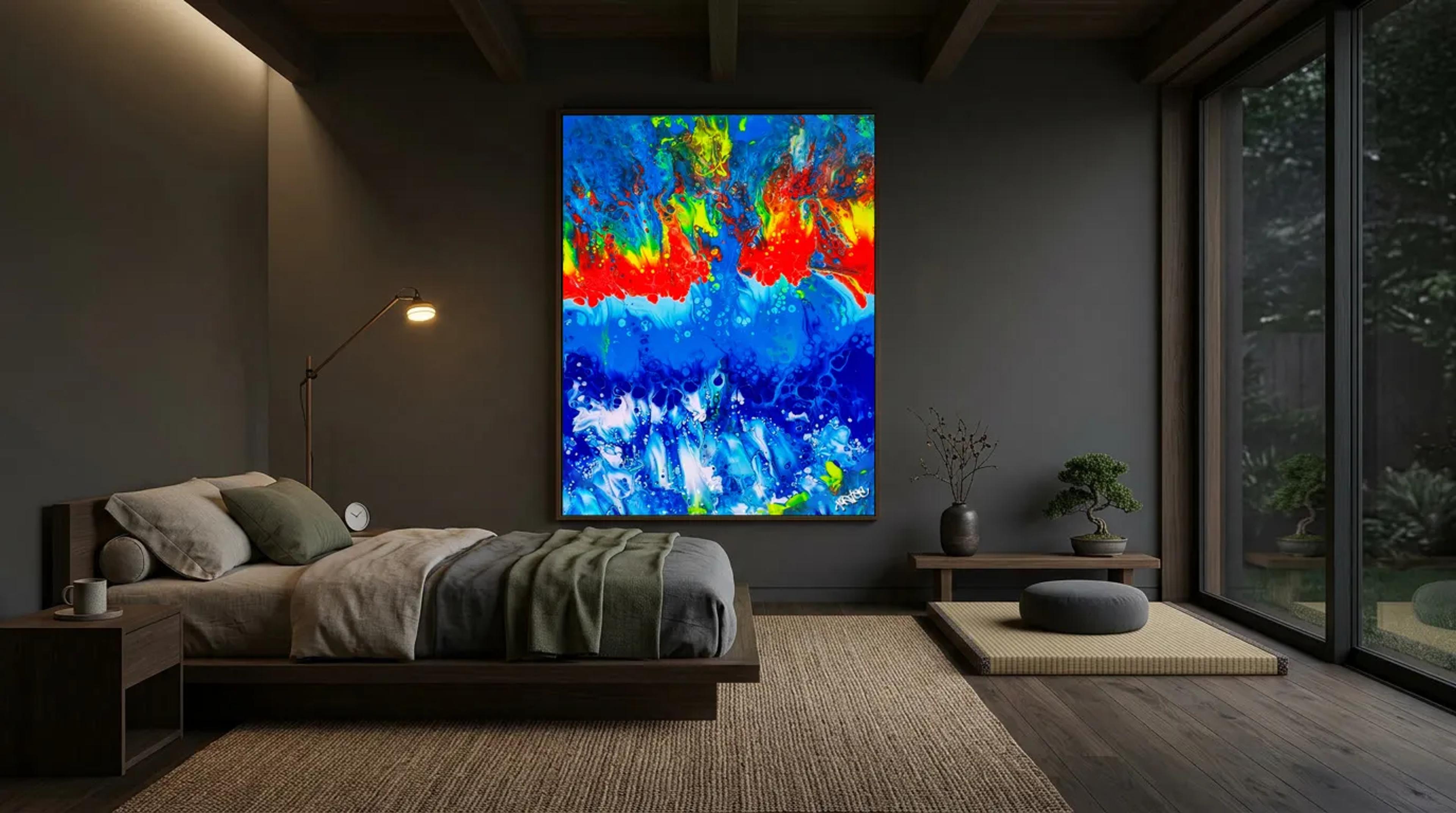
Abstract art is one of the most powerful tools in a room, precisely because it doesn't depict anything specific. With no literal subject pulling your attention, the work hits you on a sensory level, and the room around it has to respond.
Color as atmosphere
A large abstract piece dominated by deep blues and greens reads as calm and depth. Warm reds and oranges push energy and warmth into the space. The colors in an abstract painting set the emotional temperature of the whole room before anyone says a word.
Research published in Frontiers in Psychology confirms that warm colors like red and orange enhance motivation and social interaction, while cool tones like blue and green produce calming effects. The palette of an abstract work doesn't just set a mood. It shapes how people feel and behave in the space.
Texture you can feel
Original abstract paintings, especially mixed media work, have a physical presence reproductions can't match. Heavy impasto, layered materials, three-dimensional elements catch light and cast shadows that change as the day moves. The piece is different at 9 a.m. than it is at 6 p.m., and that's part of why it's worth living with.
The conversation starter
Abstract art invites interpretation. Two people stand in front of the same piece and see completely different things. That ambiguity makes it the ultimate conversation starter. Guests notice it, think about it, and want to talk about it. Try that with a generic print of a bicycle in Paris.
Scale and impact
Abstract art thrives at scale. A large abstract piece doesn't overwhelm a room the way a large figurative painting can. It creates an immersive environment instead. The bigger the piece, the more it feels like a window into another world rather than a decoration on the wall.
Interior staging data backs this up. According to the National Association of Realtors' 2025 Profile of Home Staging, 29% of real estate agents reported that staged homes, where art is a key component, sold for 1 to 10% more than unstaged homes. On a $400,000 home, that's a $4,000 to $40,000 difference. Art doing real work, in numbers.
Finding your abstract
If you're new to abstract art, spend time looking. Notice which pieces pull you in and which leave you cold. Abstract work is deeply personal, what resonates with you reveals something about how you process color, form, and emotion. Trust that response. It's smarter than your design Pinterest board.
Frequently Asked Questions
As a rule of thumb, the piece should fill two-thirds to three-quarters of the available wall space above a sofa or focal piece of furniture. When in doubt, go bigger. Small abstract work on a large wall reads as an afterthought.
Cooler tones (blues, greens, soft greys) are easier to live with in a bedroom because they slow the room down. If you want warmth, use it as an accent rather than the dominant tone.
It can, but clashing isn't always bad. A high-contrast abstract piece against neutral furniture creates exactly the tension that makes a room memorable. The clash is only a problem if you didn't choose it.
Originals by working artists generally hold value better than open-edition prints. Abstract work by recognized artists has appreciated significantly over the last twenty years, in line with the broader contemporary market.
Explore These Pieces
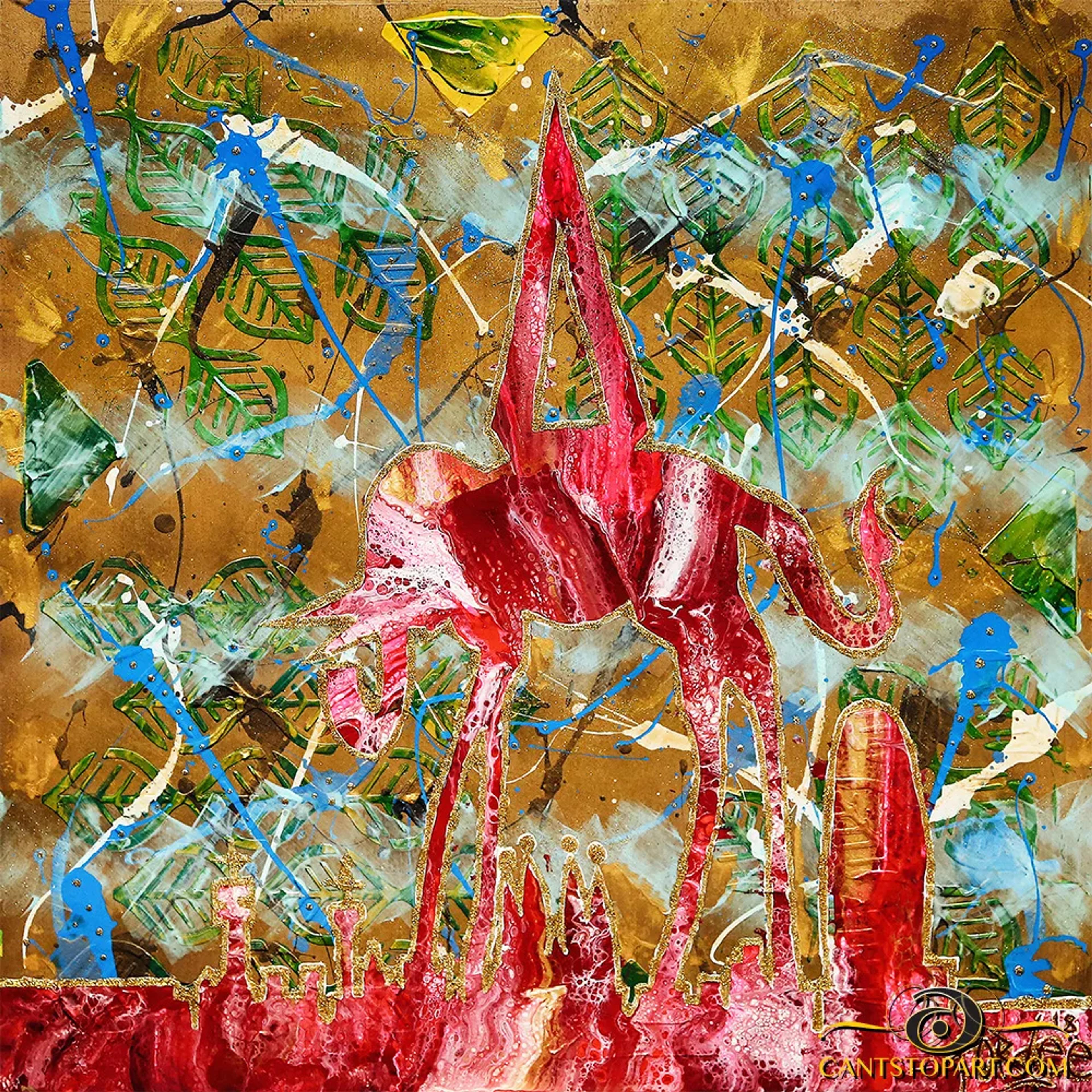
About the Author
Fordee is a Los Angeles-born, Barcelona-based painter and mixed media artist. His work spans pop art, contemporary, abstract, and street art using acrylic, resin, gold foil, alcohol ink, spray paint, and mixed media on canvas, wood, and furniture. Every piece in the collection is a one-of-a-kind original, shipped worldwide from his Barcelona studio.
Keep Reading
 culture
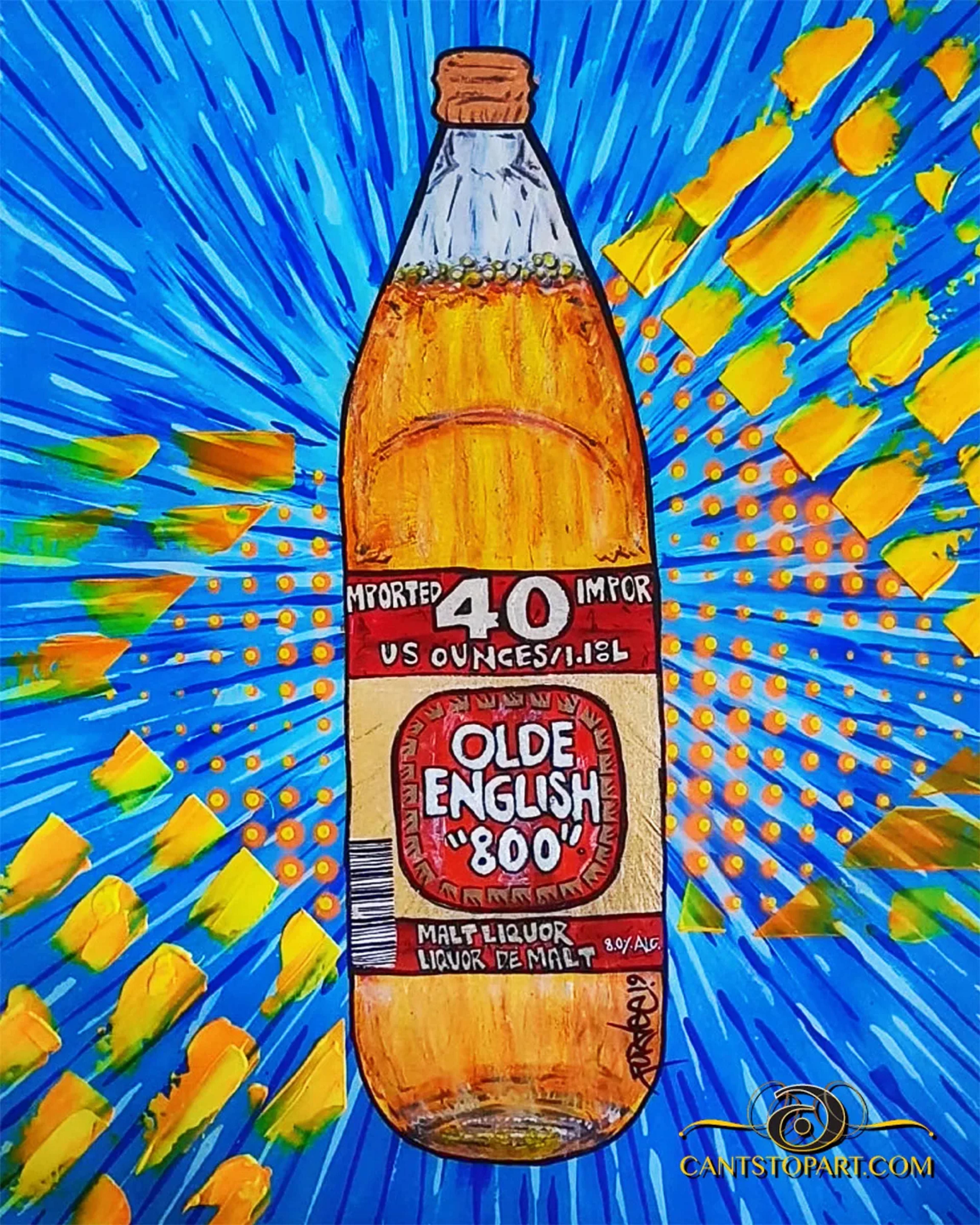
What "Pop Art" Means in 2026, And How a Working Artist Builds It Today
Pop art didn't end with Warhol and Lichtenstein. The movement is alive, weirder than ever, and being made by working artists right now.
 culture
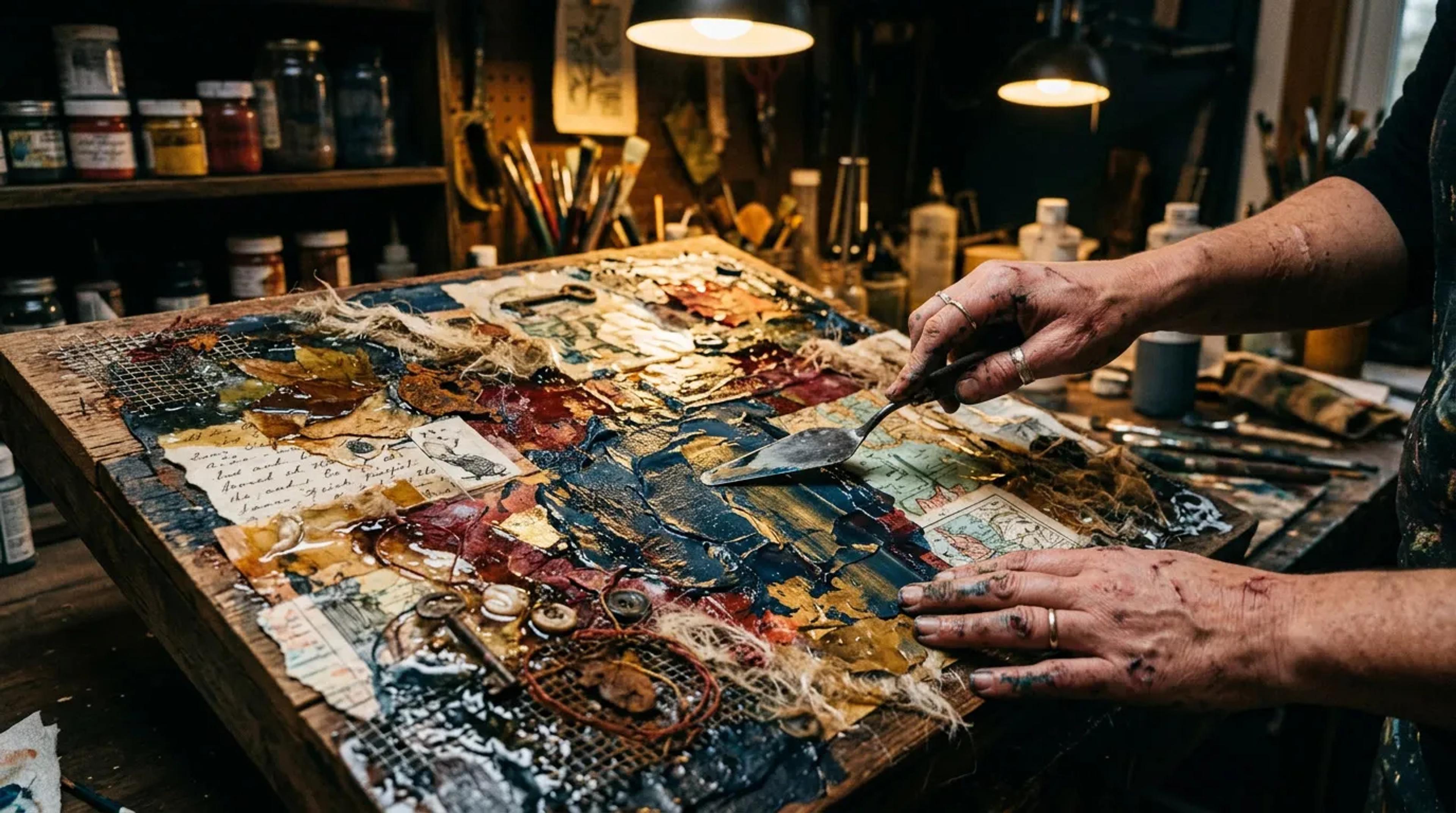
The Rise of Mixed Media: Why Artists Are Breaking Boundaries
There used to be one box per artist: painter, sculptor, printmaker. The most interesting work today is happening when those boxes get smashed.
 culture
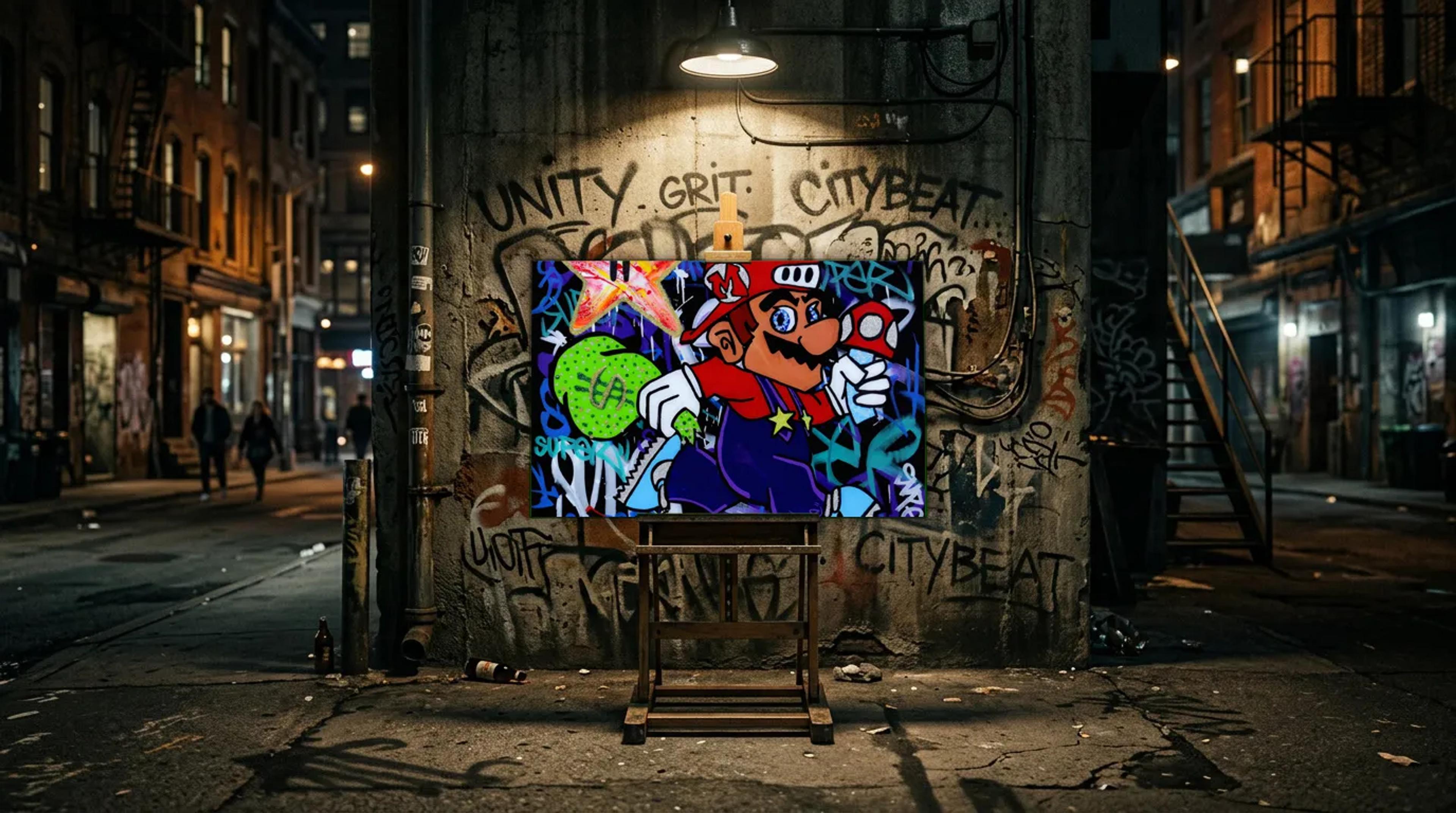
Street Art's Influence on Contemporary Design
Street art was dismissed as vandalism for decades. Now it sets the visual tone for fashion, interiors, and most of the contemporary art selling at auction.
Inspired by what you see?
Explore the full collection of original artwork, prints, and more.
Browse the Collection