Back to Blog
What "Pop Art" Means in 2026, And How a Working Artist Builds It Today
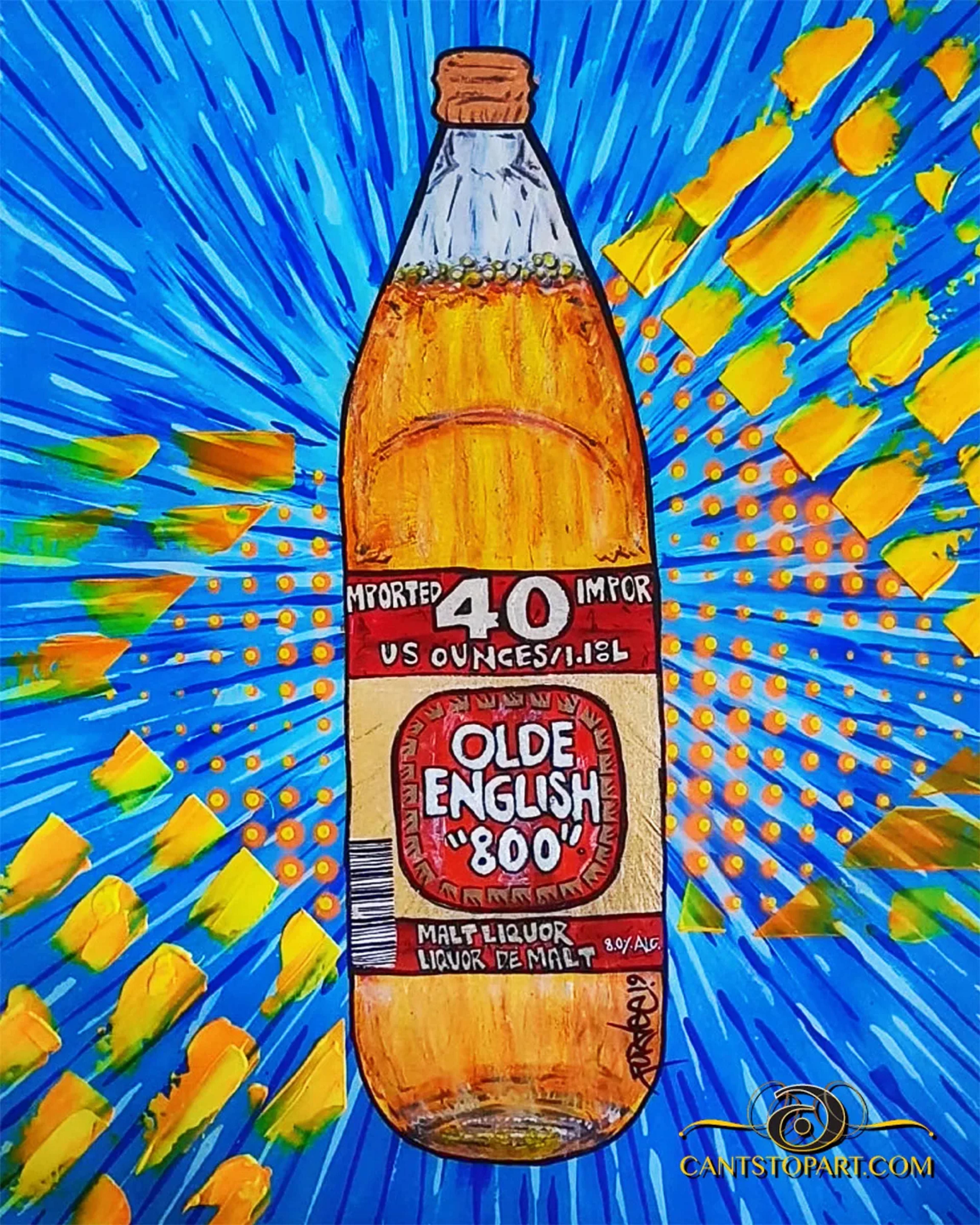
Pop art has a publicity problem. Most people still picture Andy Warhol and Roy Lichtenstein when they hear the phrase. Both are foundational. Both also died decades ago. The genre that started in the 1960s as a rebellion against fine-art seriousness has kept moving since then, and what's happening in 2026 looks different from what's in the textbooks.
Here's where the genre actually is, what working artists are making in it today, and why it's still one of the strongest categories in the contemporary market.
The 1960s setup
The original wave (Warhol, Lichtenstein, Wesselmann, Oldenburg) pulled imagery from advertising, comics, and consumer products. The point was partly satirical, partly democratic. Art didn't have to come from oil-on-canvas tradition. It could come from Campbell's Soup cans and Ben-Day dots.
The genre's biggest move was deciding that pop culture imagery deserved serious treatment. That decision is still doing work sixty years later.
The 1980s and 90s expansion
Basquiat and Haring expanded what pop could mean by pulling it through the streets of New York, mixing it with hip hop and graffiti, and treating identity as part of the imagery. The category stopped being just about consumer products and started being about culture in a broader sense.
By the 90s, designers like Takashi Murakami were building pop into a global, character-driven aesthetic that crossed between fine art, fashion, and commercial design with no apparent friction.
The 2000s and 2010s street crossover
KAWS, Banksy, Shepard Fairey, and a wave of artists who came up through street art turned pop into something with edge. Street culture became part of pop's grammar, and the auction market took notice.
KAWS's THE KAWS ALBUM hit $14.8 million at Sotheby's Hong Kong in 2019, nearly fifteen times its high estimate. Banksy's Love is in the Bin sold for $25.4 million at Sotheby's in 2021. The scale of what "pop" could mean in the secondary market changed permanently.
Today: layered, physical, materially serious
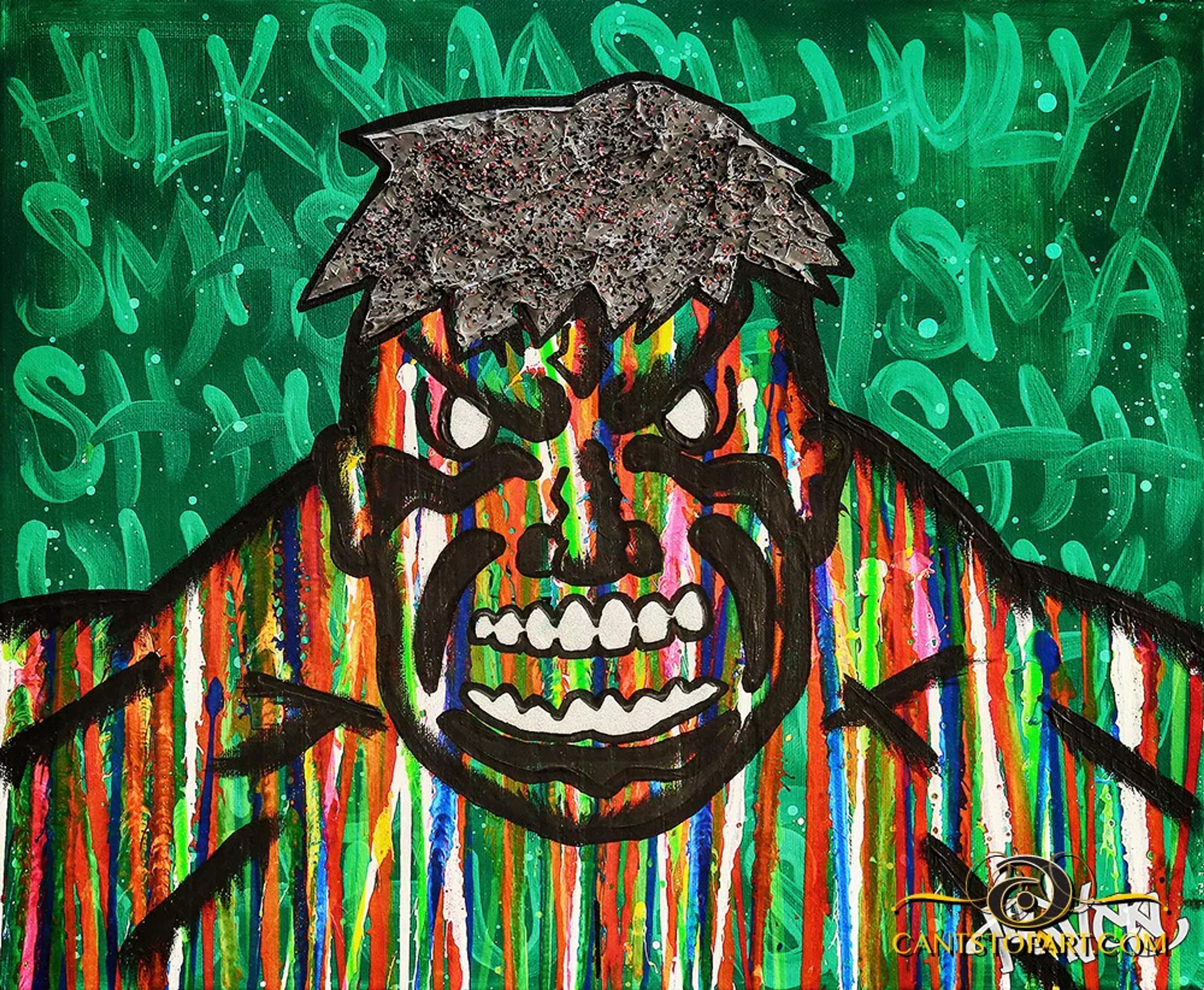
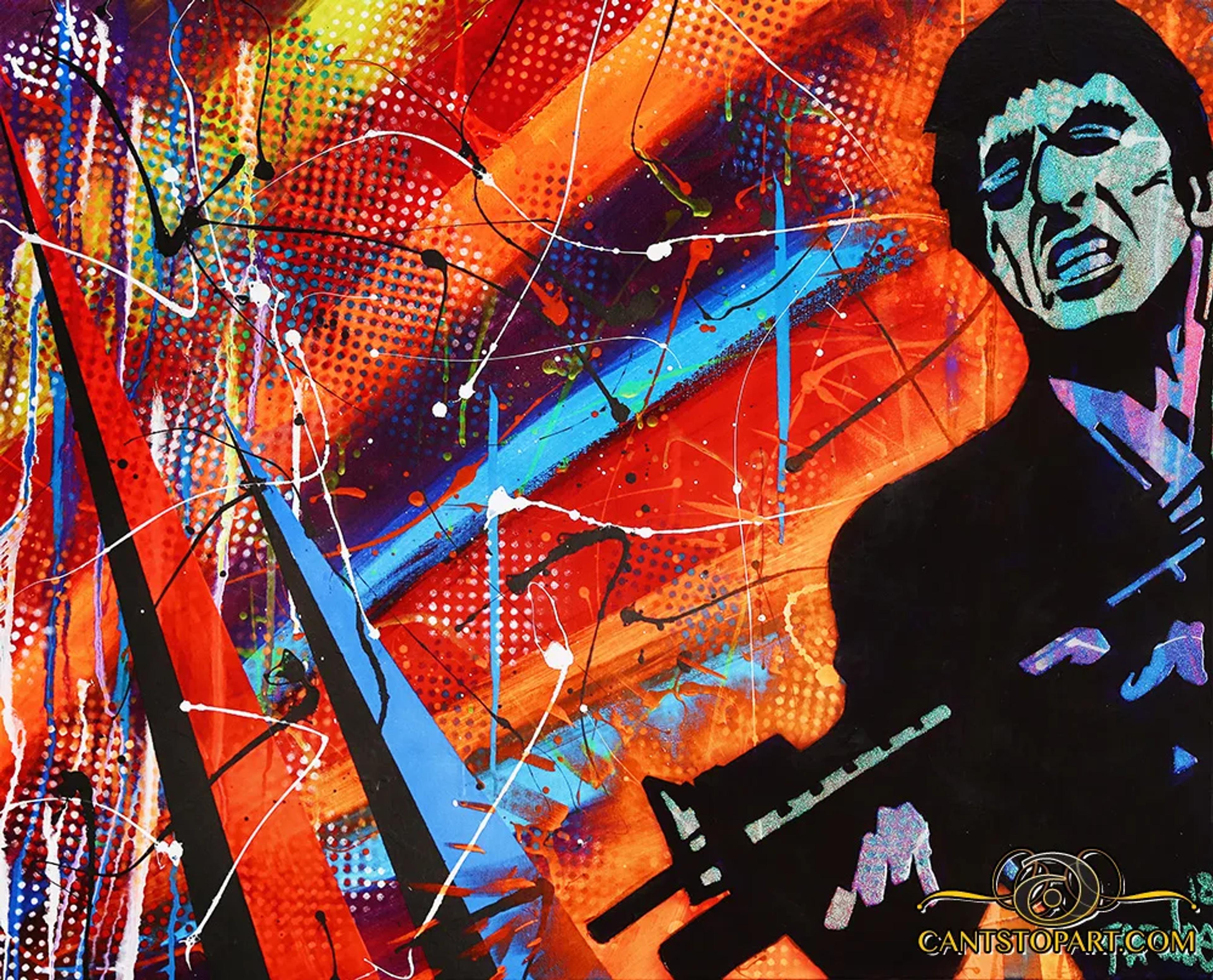
What's happening now is the most interesting chapter. Working artists are blending classic pop iconography (cartoon characters, comic panels, brand logos) with mixed media depth: gold foil, resin, concrete on wood, found objects, layered texture. The image is still pop. The object is something a 1960s pop artist would not recognize.
Part of this is reaction. After a decade of digital art and NFT speculation, collectors swung hard back toward physical objects with weight, surface, and scarcity. Pop survived that swing because pop has always been about iconography, and iconography lives just as well in a heavily materialed mixed media piece as in a screen print.
Part of it is also generational. Younger collectors grew up on the same pop iconography as the artists making the work. The shared cultural language between contemporary pop artists and their buyers is closer than it's ever been.
How a working pop artist builds today
The process for a contemporary pop piece often runs: reference and sketch, base color and primer, linework or stencil for the recognizable image, bold pop color layers, mixed media additions for texture and depth, gold foil or metallic accents for light play, and a final resin layer for gloss and protection.
The result is recognizable as pop on the first glance and reveals layers of material complexity on the second. That double-take is the whole point.
Where this is going
Pop will keep absorbing. It always has. The current absorption is from street culture, digital aesthetics, and luxury materials. The next decade is likely to add more cross-cultural iconography (the genre has been heavy on Western imagery and is starting to broaden), more sculptural pop (pieces that are objects first, paintings second), and more direct artist-to-collector relationships outside the traditional gallery system.
The genre that started as a rebellion against fine-art seriousness has become one of the most durable categories in contemporary art. It survives because it stays curious. The cultural references update, the materials get richer, and the imagery keeps reflecting whatever pop culture is actually doing.
If you wrote off pop art as a 1960s style with one famous run, you missed the second, third, and fourth chapters. The fourth one is happening now.
Frequently Asked Questions
Yes, very actively. Contemporary pop is one of the strongest categories in the auction market and a busy area for working artists. The visual language has evolved (more mixed media, more material depth, more cross-pollination with street art) but the core ideas of pop iconography and accessible imagery are intact.
1960s pop was largely flat and graphic, often referencing print media and consumer products. Contemporary pop frequently adds physical depth: mixed media texture, gold foil, resin layers, sculptural elements. The image is still pop. The object is more layered.
Top names have driven serious auction returns over the last two decades, and the broader category has grown alongside them. As with any art category, results vary by artist, edition, and condition. The bigger reason to buy contemporary pop is that you want to live with the work, with appreciation as a possible upside rather than the main goal.
KAWS, Takashi Murakami, Banksy (whose work overlaps with both pop and street art), Mr. Brainwash, and a wide field of working contemporary artists building on the tradition. The genre is busy and varied, with strong work happening at every price level.
Explore These Pieces
About the Author
Fordee is a Los Angeles-born, Barcelona-based painter and mixed media artist. His work spans pop art, contemporary, abstract, and street art using acrylic, resin, gold foil, alcohol ink, spray paint, and mixed media on canvas, wood, and furniture. Every piece in the collection is a one-of-a-kind original, shipped worldwide from his Barcelona studio.
Keep Reading
 culture
The Rise of Mixed Media: Why Artists Are Breaking Boundaries
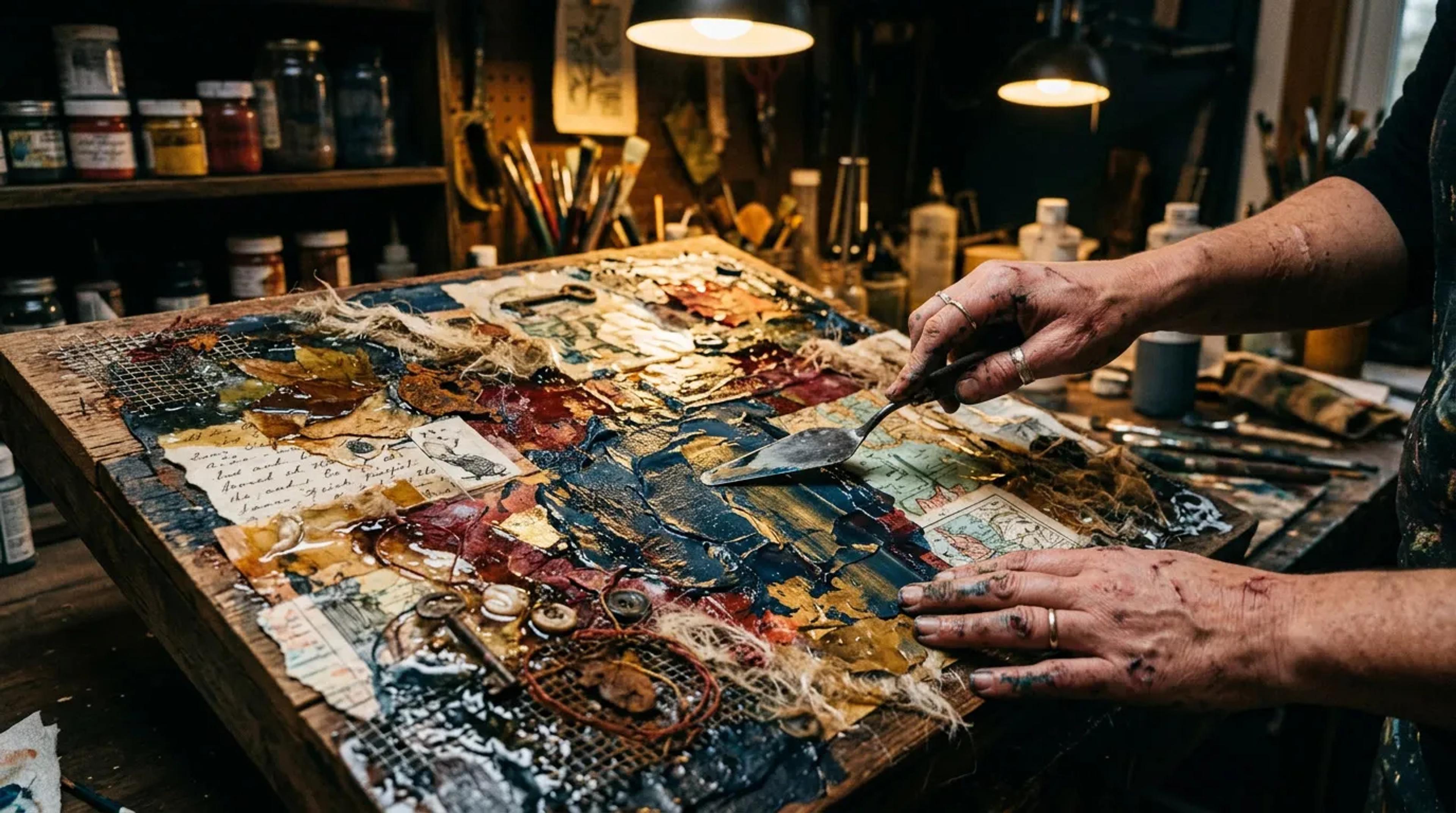
There used to be one box per artist: painter, sculptor, printmaker. The most interesting work today is happening when those boxes get smashed.
 culture
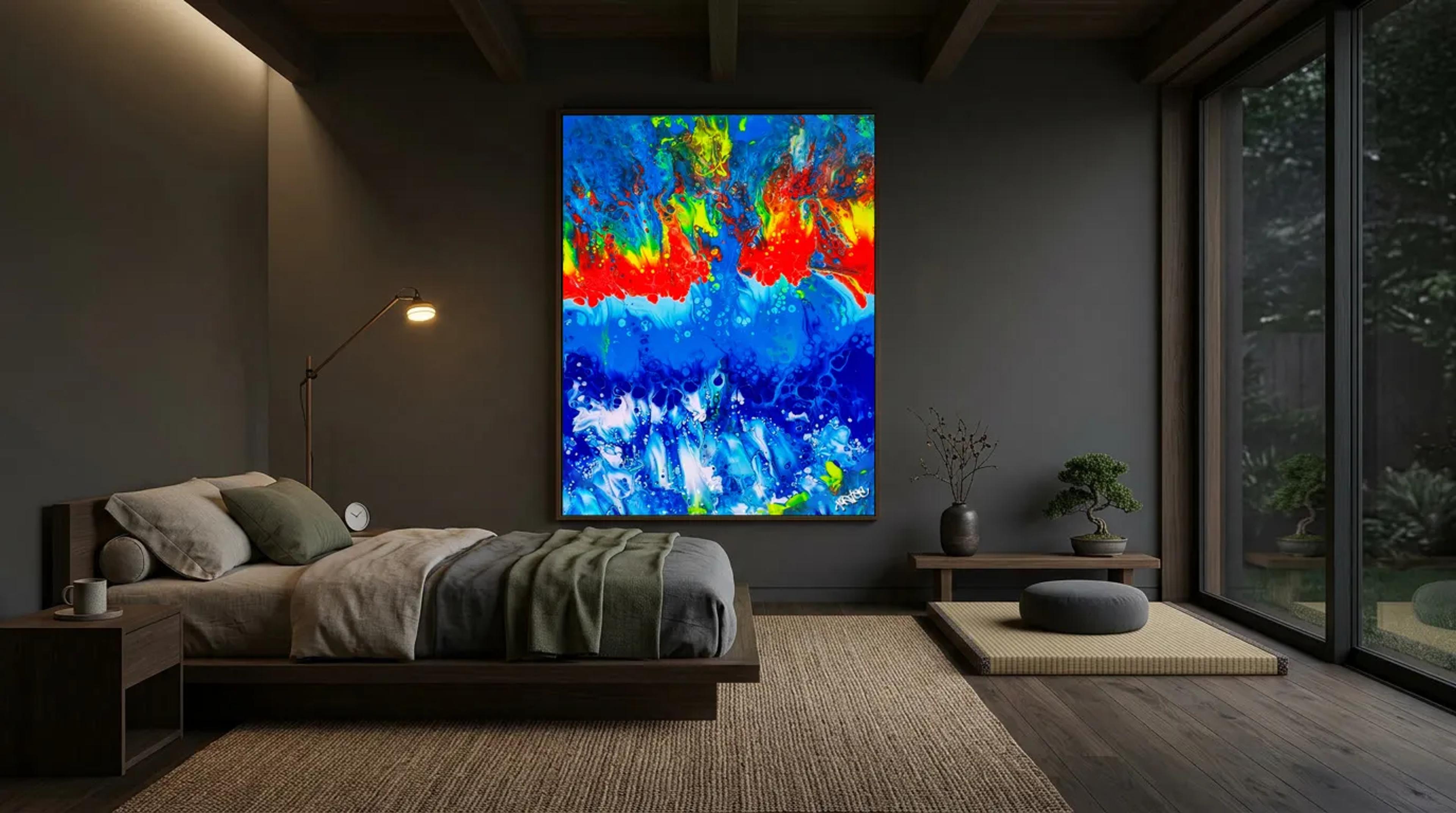
How Abstract Art Changes a Room
Abstract art doesn't decorate a room, it tunes it. The piece on the wall sets the emotional temperature of everything else in the space.
 culture
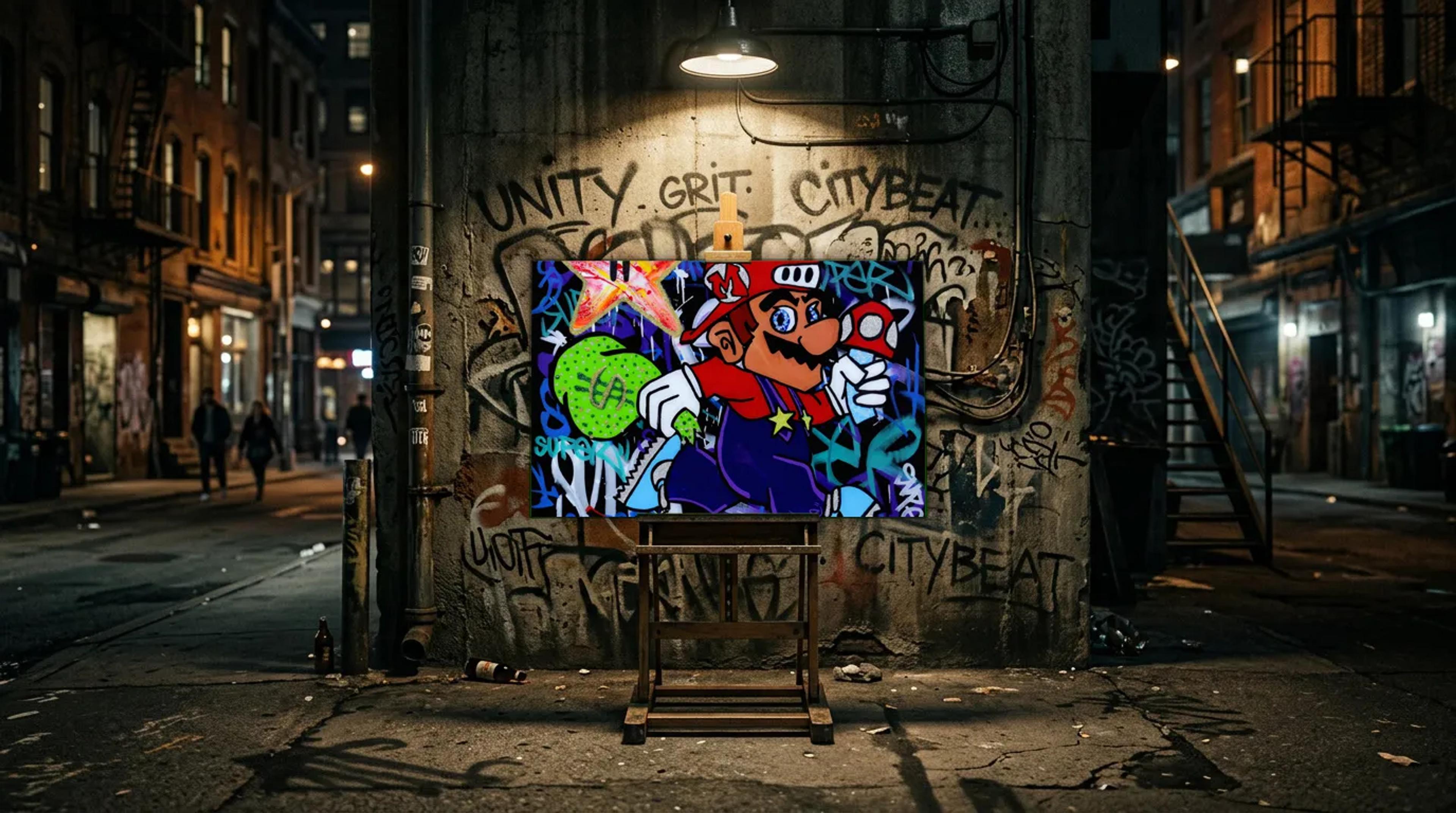
Street Art's Influence on Contemporary Design
Street art was dismissed as vandalism for decades. Now it sets the visual tone for fashion, interiors, and most of the contemporary art selling at auction.
Inspired by what you see?
Explore the full collection of original artwork, prints, and more.
Browse the Collection