Back to Blog
The Difference Between Prints and Originals: And Why It Matters
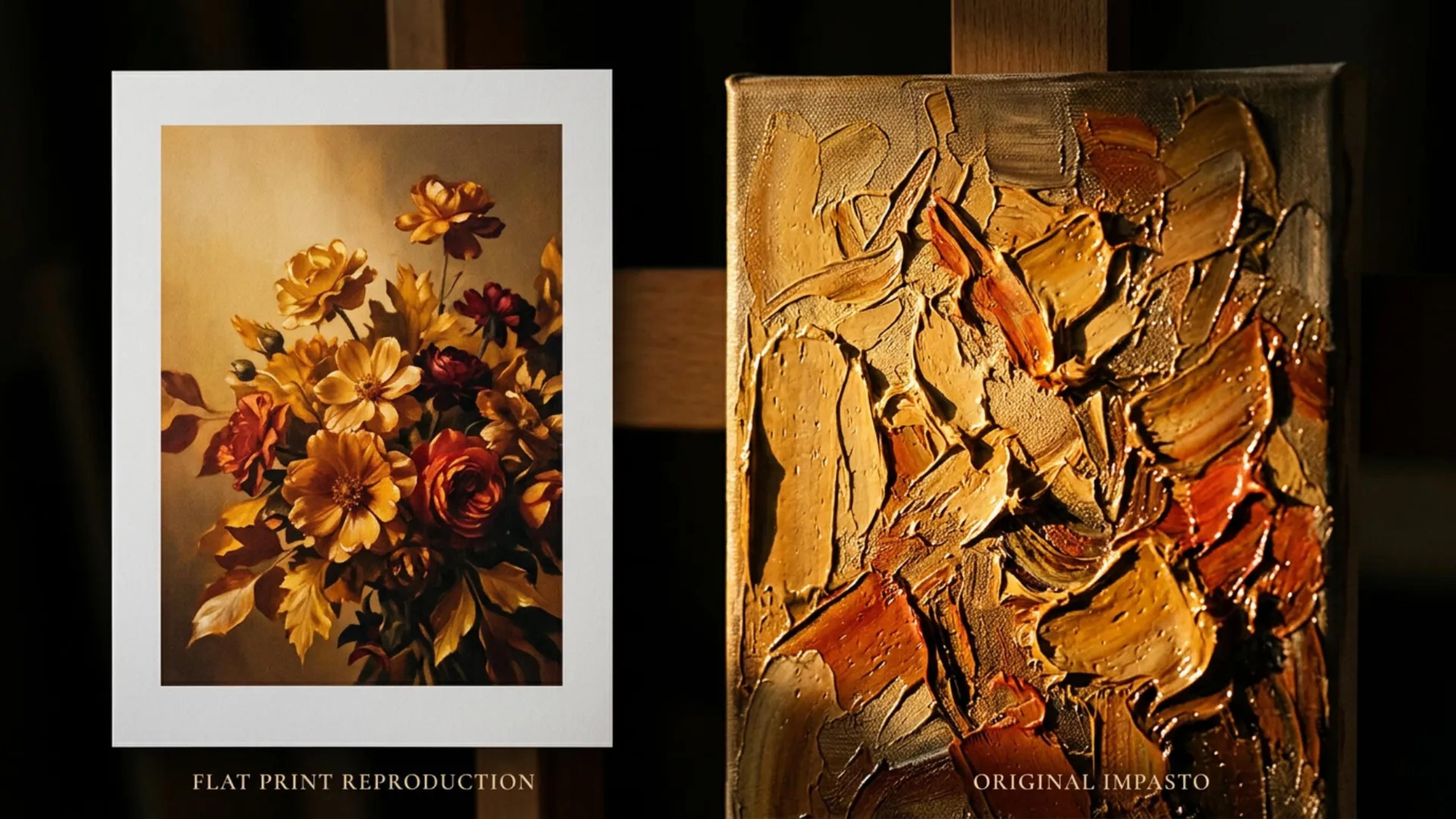
Walk into any art-filled home and you'll see a mix of original works and prints. Both have their place, but understanding what makes them different helps you buy with intention instead of by mistake.
What is an original
An original artwork is the one piece created by the artist's hand. Whether it's a painting on canvas, a mixed media piece on wood, or a sculpture, it exists exactly once. The textures, the imperfections, the layers of paint built up over hours or days, those are unique to that single work. Nothing else in the world looks the same.
What is a print
A print is a reproduction of an artwork, usually a high-quality digital print on paper or canvas. Some prints are limited editions (numbered, often signed), others are open editions produced in unlimited quantities. Both are legitimate ways to enjoy art, but they carry different value.
The global art market reached $59.6 billion in 2025, according to the Art Basel and UBS Global Art Market Report 2026. Within that market, original works by established artists routinely appreciate. The Artprice100 index has risen 589% since 2000. Prints, while more accessible, rarely deliver the same long-term returns.
The value difference
Originals hold and often increase in value over time. A limited-edition print can appreciate modestly. Open-edition prints generally don't. If you're thinking about art as an investment, originals are the stronger choice, full stop.
Morgan Stanley's 2025 art market outlook projected average annual returns of approximately 4.9% for art over the next seven-plus years. For context, contemporary art accounted for just 3% of the auction market in 2000. By 2021, that share had climbed to 23%, according to Artprice. The category that originals live in has been on a steep curve.
The experience difference
Stand in front of an original painting and you'll notice things a print can't capture. The texture of the brushwork. The depth of layered paint. The way light plays across a surface that was built up, not printed flat. Prints are flat by nature. Originals have a physical presence that changes how a room feels when you walk into it.
When prints make sense
Prints are perfect for filling out a space on a budget, testing whether you like living with a particular artist's aesthetic, or adding art to rooms where conditions might damage an original (kitchens, bathrooms, anywhere with steam or grease). They're a gateway. A lot of collectors start with prints before moving to originals once they know what they actually want on their walls.
The Art Basel and UBS Survey of Global Collecting 2025 confirms that path: 76% of Gen Z collectors now buy art through online platforms, and Gen Z allocates 26% of their portfolios to art, the highest share of any age group. Plenty of those collectors start with prints or smaller works before stepping into originals as their taste sharpens.
Both have their place. Buy prints to live with art. Buy originals to live with the actual thing.
Frequently Asked Questions
No. A signed print is still a reproduction, even if the artist has signed and numbered it. An original is a single work made by the artist's hand. Signed limited editions can hold value better than open editions, but they don't reach original-level value.
Originals exist once. They take hours or weeks of an artist's time, use real materials, and can't be reproduced. Prints exist in editions and cost a fraction of that to make. The price gap is a scarcity gap.
Either works. Prints are a low-risk way to figure out what you like to live with. Originals are a stronger long-term move once you know your taste. Many collectors do both at the same time.
Open-edition prints rarely appreciate. Limited-edition prints by recognized artists can hold or grow in value, but not at the rate of originals. Treat most prints as objects to enjoy, not assets.
Explore These Pieces
About the Author
Fordee is a Los Angeles-born, Barcelona-based painter and mixed media artist. His work spans pop art, contemporary, abstract, and street art using acrylic, resin, gold foil, alcohol ink, spray paint, and mixed media on canvas, wood, and furniture. Every piece in the collection is a one-of-a-kind original, shipped worldwide from his Barcelona studio.
Keep Reading
 collecting
Why I Sign, Number, and Document Every Piece I Sell
Provenance is the unsexy word for "this art is real." Here's how I document every original and why that paperwork outlasts the paint.
 collecting
The Gallery Wall, Done Right: Hanging Multiple Pieces in a Real Home
Gallery walls live or die in the layout. Here's how to plan one that looks intentional instead of like you ran out of nails.
- collecting
Caring for Original Artwork: Light, Humidity, and the Long Game
An original painting is a long-term object. Treat it like one. Here's what actually matters, and what doesn't, for keeping a piece looking right for decades.
Inspired by what you see?
Explore the full collection of original artwork, prints, and more.
Browse the Collection