Back to Blog
Mixed Media on Furniture: Why I Paint Cabinets, Doors, and Tables
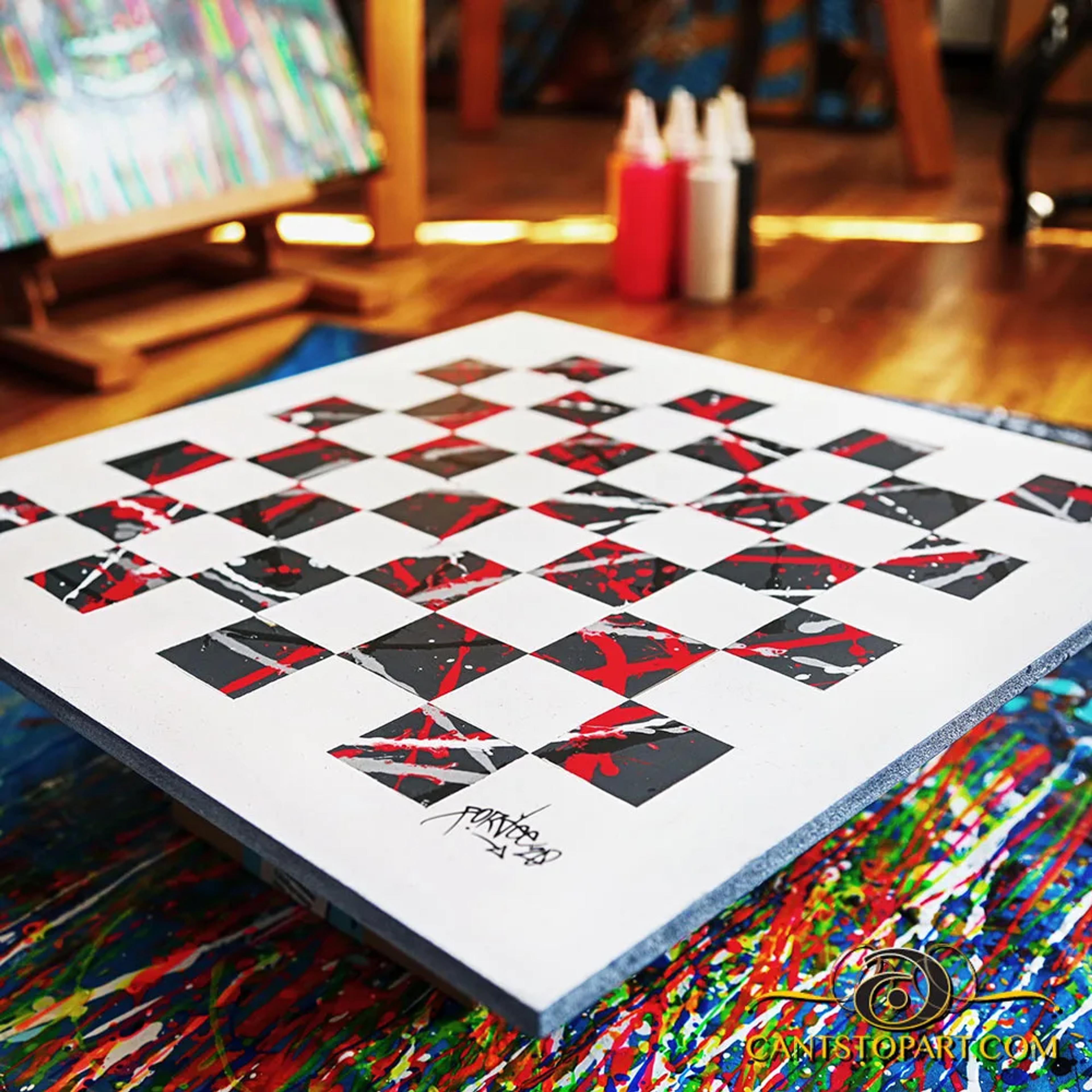
A painting hangs on a wall and gets looked at. A painted piece of furniture gets used. The same level of work goes into both, but the second one shows up in your daily life in a way a wall piece never does. That's why I keep coming back to furniture as a substrate.
Why paint furniture at all
Furniture is a story before any paint hits it. A chess board was someone's game night. A cabinet stored someone's life for years. A vase held flowers in someone else's living room. When I paint these objects, the original story doesn't disappear. It becomes the foundation of the new one.
The piece you end up with is part artwork and part artifact. It's also genuinely functional. The chess board still works as a chess board. The vase still holds water and stems.
Choosing the piece
Solid wood is the easy answer. It sands clean, takes paint and primer well, and survives the durability tests that come with daily use. Salvaged or vintage furniture often has the most character, and the surface marks (small dents, water rings, edge wear) become part of the final composition rather than problems to hide.
Mass-produced furniture is harder. The veneer surfaces don't hold paint as well, and the joint construction often won't survive being painted, used, and shipped. Mass-produced doesn't always mean unworkable, but it means more prep work to make the surface stable.
Surface prep is half the job
Furniture goes through more prep than canvas. Sanding back any old finish, dealing with stains or sealants from previous lives, priming with the right base for whatever's coming on top. A piece that's going to live with food, water, or hands needs a different prep than a wall piece.
Skip the prep and the piece looks great for two months. A year in, the paint chips off corners and you've sold someone a problem.
Resin earns its place on furniture
Resin is the difference between a painted piece of furniture and an actual functional surface. A resin'd chess board can be played on for years. A resin'd table can take a wet glass without staining. The resin layer protects the artwork below and turns the whole object into something that holds up.
That protection comes at a cost: extra weight, extra time, and the resin itself isn't food-safe in every formulation. For pieces that contact food directly (cutting boards, plates), I avoid resin and use food-safe finishes instead. For chess boards, vases, side tables, and most household furniture, resin is the right answer.
The chess board as a case study
The white chess board started as a found wooden board. Sanded, primed, painted as a single composition that respects the grid of the squares without being beholden to them. Then a thin resin layer for play durability, fully cured, then signed and dated.
It's a real chess board. It's also a piece of original art that anyone walking into the room sees as art before they see it as a board.
Living with painted furniture
Sealed and resin'd pieces handle daily use about as well as well-made commercial furniture. Care is roughly the same: clean with a damp cloth, no harsh solvents, keep out of direct sun, mind sharp edges that could scratch the resin.
Sealed pieces aren't outdoor furniture. Resin doesn't love UV over years, and humidity swings are tougher on a painted wood piece than on a plain wood piece.
Why I keep doing it
Painted furniture lives in someone's daily life in a way a wall piece doesn't. The chess board gets touched. The vase holds flowers. The cabinet opens and closes ten times a day. That use is part of the artwork, not separate from it.
It's also one of the few formats where every piece has to be a one-of-one. Mass-producing painted furniture defeats the whole point. Each piece starts as a different object with a different history, and the artwork that lands on it has to belong to that specific piece. The result is genuinely unique objects, not editioned ones.
Frequently Asked Questions
Yes. The board is sealed and resin'd for play durability. Treat it like a quality wood game board: clean with a damp cloth, no harsh solvents, keep it out of direct sun.
Most pieces get a resin top layer that locks the artwork beneath and protects it from water rings, light scratching, and daily wear. Pieces that contact food directly get food-safe finishes instead, which behave differently from resin.
Yes. The commission process for furniture is similar to a wall piece: brief, sketch, deposit, painting, approval, shipping. Substrate sourcing (the actual furniture) is part of the early conversation, since the piece itself shapes what the artwork can be.
Sealed pieces hold up well with normal household use. Heavy daily wear in high-traffic areas (entryway tables, kitchen counters) eventually shows. Decorative or game furniture used regularly stays looking right for years.
Explore These Pieces


About the Author
Fordee is a Los Angeles-born, Barcelona-based painter and mixed media artist. His work spans pop art, contemporary, abstract, and street art using acrylic, resin, gold foil, alcohol ink, spray paint, and mixed media on canvas, wood, and furniture. Every piece in the collection is a one-of-a-kind original, shipped worldwide from his Barcelona studio.
Keep Reading
 studio
Gold Foil, Resin, and Why Surface Matters in Original Art
A flat painting and a resin-and-foil piece can be the same image. They're not the same object. The surface is the reason.
- studio
Inside a Pop Art Piece: From Blank Canvas to Final Resin Layer
People ask how a pop art piece actually gets made. Here's the full process from sketch to resin on a single piece, mistakes and all.
 studio
Commissioning a Piece: What Happens Between "Yes" and "Delivered"
A commission isn't just a custom paint job. It's a few weeks of conversation, sketches, materials, and one piece made specifically for your space.
Inspired by what you see?
Explore the full collection of original artwork, prints, and more.
Browse the Collection